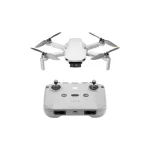
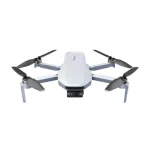
DJI grew from flight-control research into a broad camera, enterprise and agriculture ecosystem. Here is the useful history—and the current buying context.
Your drone guides.
Closer on Google.
to see more of our trusted coverage when you search.
The quick answer
DJI was founded in 2006 and built its reputation through flight-control systems and integrated camera drones. The company’s current range is no longer one simple consumer ladder: Mini, Air and Mavic target different camera-drone buyers; Avata serves immersive FPV; Inspire serves cinema; Matrice and Dock products support enterprise work; Agras systems handle agriculture. Choose by mission, regional availability and support—not by assuming the newest or largest DJI is automatically best.
This article is a researched company and product-family overview, not a claim that we have tested every DJI aircraft. Current-model references are based on DJI’s official product and enterprise pages and may vary by country.
DJI history: the milestones that changed the product line
| Period | Milestone | Why it matters |
|---|---|---|
| 2006 | DJI founded | The company began around flight-control technology rather than a finished consumer camera drone |
| 2012–2013 | Integrated ready-to-fly systems and Phantom era | Airframe, controller, stabilization and camera workflows became easier to buy as one ecosystem |
| 2015 | DJI Agriculture formed; Agras MG-1 released | DJI expanded beyond photography into crop-protection operations |
| 2016 onward | Portable folding camera drones | Mavic-family portability changed expectations for travel-ready aerial imaging |
| 2020s | Broader consumer, enterprise and automated operations | DJI added compact sub-250 g options, FPV products, docks, mapping, thermal and multispectral systems |
DJI Agriculture’s official history says DJI was founded in 2006, began exploring agricultural applications in 2012, formed DJI Agriculture in 2015 and released the Agras MG-1 that year. That chronology is more reliable than repeating old market-share or staff-count figures without current company reporting.
Primary source: DJI Agriculture history.
DJI’s current consumer product families
| Family | Typical role | Choose it when |
|---|---|---|
| Mini | Highly portable camera drones, often designed around a sub-250 g airframe | Travel weight and easy packing matter; verify the exact model’s camera and obstacle-sensing features |
| Air | Mid-size foldable camera drones | You want a step up in camera system or flight capability without moving to the largest prosumer body |
| Mavic | Flagship foldable camera drones | Image quality, multi-camera flexibility and advanced flight systems outweigh price and size |
| Avata | Ducted immersive FPV | You want a goggles-based experience and understand the rules, control mode and video workflow |
| Inspire | Professional cinema platform | Interchangeable camera workflows, crew operation and production integration justify the cost |
| Neo / Flip and entry concepts | Simple, compact capture and approachable flight | Convenience matters more than maximum camera or wind performance |
Names overlap across generations, and a family label does not guarantee the same camera, controller, obstacle sensing or regulatory category. Compare the exact aircraft page, manual and bundle. A Mini model can be the smarter travel tool; a Mavic can be the stronger camera platform; neither is universally “best.”
For practical differences between older generations, see our original Mavic Air review, Mavic Air 2 guide and Mavic 2 Pro and Zoom comparison.
DJI Enterprise and Agriculture are different buying systems

DJI Enterprise currently lists platforms such as the Matrice 400, Matrice 4 series, Matrice 350 RTK, Mavic 3 Enterprise, Matrice 30 series and Mavic 3 Multispectral, alongside FlightHub 2 and DJI Terra software. These are mission systems for mapping, inspection, public safety, thermal imaging and managed fleets—not simply consumer drones with bigger cameras.
The DJI Enterprise catalog describes current products and workflows. For example, the Mavic 3 Enterprise series pairs portable airframes with mapping or thermal configurations, while larger Matrice platforms support heavier or interchangeable payloads.

DJI’s agriculture range has advanced far beyond the original MG-1 shown above. The current Agras T100 is a specialized commercial aircraft with spraying, spreading and lifting configurations. DJI publishes a 100-liter spray tank and up to a 100 kg operational payload for specific configurations. Those figures do not make it a consumer heavy-lift recommendation: training, local rules, chemicals, logistics and authorized support are part of the system.
Do not transfer consumer assumptions to enterprise aircraft
A larger payload, RTK option or IP rating solves a professional requirement; it also changes operating procedures, cost and regulatory exposure. Buy through the appropriate channel and plan the whole workflow, including software, batteries, charging, training and service.
How to choose a DJI drone
- Define the output. Family video, travel photography, inspection data and cinema production need different cameras and workflows.
- Check regional availability. Model names, radio limits, bundles and sales channels can vary by country.
- Compare the exact camera modes. Sensor size, lenses, frame rates, codecs and gimbal movement matter more than a single “4K” label.
- Price the complete kit. Controller, batteries, charger, filters, storage and service plan can materially change cost.
- Confirm controller and app support. Older aircraft may rely on legacy mobile software or discontinued accessories.
- Read current regulatory requirements. Weight, Remote ID, intended use and airspace affect how you can operate.
- Plan support life. A good used price can be false economy if batteries or repair service are ending.
Before buying used, learn what the terms mean in our drone glossary and how the systems interact in how drones work.
Common DJI questions
Is DJI only a consumer-drone company?
No. DJI sells consumer camera and FPV products, but it also maintains enterprise, agriculture, cinema, stabilization, audio and power-product ecosystems. The support channel and software differ by product.
Which DJI family is best for beginners?
The best first DJI depends on budget, region, flying environment and camera needs. A compact model can be easier to carry, but a beginner still needs airspace knowledge, safe battery habits and a controlled practice area. Start with our beginner’s guide.
Are older DJI drones still worth buying?
Sometimes, if the complete kit works and support, batteries, app compatibility and Remote ID status fit the intended use. Evaluate the exact model rather than assuming every Mavic, Phantom or Spark shares the same support status.
What rules apply in the U.S.?
Recreational pilots must follow FAA requirements including TRUST, visual line of sight and airspace restrictions. Registered drones must comply with Remote ID unless an exception applies. Check the FAA recreational rules and Remote ID page.
About this update: Substantively revised September 16, 2026 using DJI and FAA primary sources. Product families change; confirm the current regional product page before purchasing.